









Interactive
~5 mins
•Jan 2026
Hypothetical Patient Case: 80-Year-Old With Depressive Episodes in Long-Term Care

Interactive Patient Case
Hypothetical Patient Case: 80-Year-Old With Depressive Episodes in Long-Term Care
Interactive
~5 mins
•Jan 2026
Jennifer Mondillo and Dr Erik Cabrera review a case of tardive dyskinesia (TD) in a patient in a long-term care (LTC) facility.
Dr Erik Cabrera is a psychiatrist with a number of LTC facilities who brings a wealth of knowledge, and Dr Jennifer Mondillo is a clinical professor at Villanova University who has held various roles in LTC, including certified nursing assistant (CNA), cart nurse, unit manager, and administrator.
Disclaimer: This is a hypothetical patient case developed for educational purposes by Dr Erik Cabrera, MD, and Dr Jennifer Mondillo, PhD, MBA, MSN, CRNP, based on characteristics of patients with tardive dyskinesia as seen in clinical practice. The hypothetical case was sponsored and co-developed by Neurocrine Biosciences.
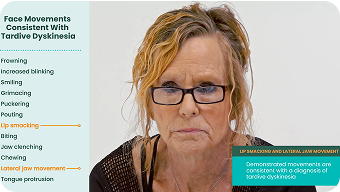
As tardive dyskinesia (TD) is often underdiagnosed in long-term care (LTC) settings, it is increasingly important to educate both residents and care staff on recognizing TD. Involuntary movements associated with TD can significantly affect residents’ daily activities, emotional well-being, and care requirements. This hypothetical case highlights the value of multidisciplinary staff education, structured assessments, and tailored treatment approaches, such as VMAT2 inhibitors, to reduce involuntary movements, with the goal of improving the quality of life.
Dr Jennifer Mondillo and Dr Erik Cabrera review the case. Dr Erik Cabrera is a psychiatrist with several LTC facilities who brings a wealth of knowledge, and Dr Jennifer Mondillo is a clinical professor at Villanova University who has held various roles in LTC, including certified nursing assistant (CNA), cart nurse, unit manager, and administrator.
80-year-old with depressive episodes in LTC
LTC, long-term care.
Patient Summary
MJ has been well-controlled on aripiprazole since admission to the LTC facility
Comorbid Conditions
Major depressive disorder
Hypothyroidism
Chronic obstructive pulmonary disease (COPD)
Osteoarthritis
Type 2 diabetes mellitus
Obesity
Current Medications
Sertraline 50 mg daily
Aripiprazole 5 mg daily
Levothyroxine 75 mcg daily
Budesonide-formoterol fumarate 80/4.5 daily
Albuterol HFA inhalation every 6 hours as needed
Acetaminophen 500 mg PO every 8 hours as needed for pain
Metformin XR 1000 mg at bedtime
Sitagliptin 50 mg daily
Patient Summary
Comorbid Conditions
Current Medications
MJ has been well-controlled on aripiprazole since admission to the LTC facility
Major depressive disorder
Hypothyroidism
Chronic obstructive pulmonary disease (COPD)
Osteoarthritis
Type 2 diabetes mellitus
Obesity
Sertraline 50 mg daily
Aripiprazole 5 mg daily
Levothyroxine 75 mcg daily
Budesonide-formoterol fumarate 80/4.5 daily
Albuterol HFA inhalation every 6 hours as needed
Acetaminophen 500 mg PO every 8 hours as needed for pain
Metformin XR 1000 mg at bedtime
Sitagliptin 50 mg daily
HFA, hydrofluoroalkane; LTC, long-term care; PO, by mouth; XR, extended-release.
In your clinical evaluation of TD, which element of MJ’s medical history is most critical?
Select all that apply.
TD, tardive dyskinesia.
In your clinical evaluation of TD, which element of MJ’s medical history is most critical?
Select all that apply.
Faculty Insights
TD, tardive dyskinesia.
Notable weight loss
Psychiatric consult evaluation (IDT requested a psychiatric consult):
Self-harm attempt x1 in 2024
Weight loss of ~8 lbs. within ~2 months
Repetitive and involuntary movement of the jaw, lips, and tongue, including grimacing, tongue thrusting
Some finger movements and wrist flexion
Modified AIMS exam performed (resident uses wheelchair)
IDT evaluation:
Frustration in loss of independence
Social withdrawal
Isolating nature due to movements
AIMS, Abnormal Involuntary Movement Scale; IDT, interdisciplinary team.
What potential consequences may contribute to a greater need for care in LTC facilities?
Select all that apply.
LTC, long-term care.
What potential consequences may contribute to a greater need for care in LTC facilities?
Select all that apply.
Faculty Insights
LTC, long-term care.
AIMS, Abnormal Involuntary Movement Scale; APA, American Psychiatric Association; LTC, long-term care; TD, tardive dyskinesia; VMAT2, Vesicular Monoamine Transporter 2.
Assuming a VMAT2 Inhibitor is appropriate for MJ, what would you consider when selecting a VMAT2 inhibitor?
Select all that apply.
TD, tardive dyskinesia; VMAT2, Vesicular Monoamine Transporter 2.
Assuming a VMAT2 Inhibitor is appropriate for MJ, what would you consider when selecting a VMAT2 inhibitor?
Select all that apply.
Faculty Insights
TD, tardive dyskinesia; VMAT2, Vesicular Monoamine Transporter 2.
We hope this case has offered useful perspectives on assessing and managing patients with TD in LTC settings.
Disclaimer: This is a hypothetical patient case developed for educational purposes by Dr Erik Cabrera, MD, and Dr Jennifer Mondillo, PhD, MBA, MSN, CRNP, based on characteristics of patients with tardive dyskinesia as seen in clinical practice. The hypothetical case was sponsored and co-developed by Neurocrine Biosciences.

By continuing to use this site, you agree to our use of cookies as described in our Cookie Policy.
